Why is the first $100,000 the hardest?
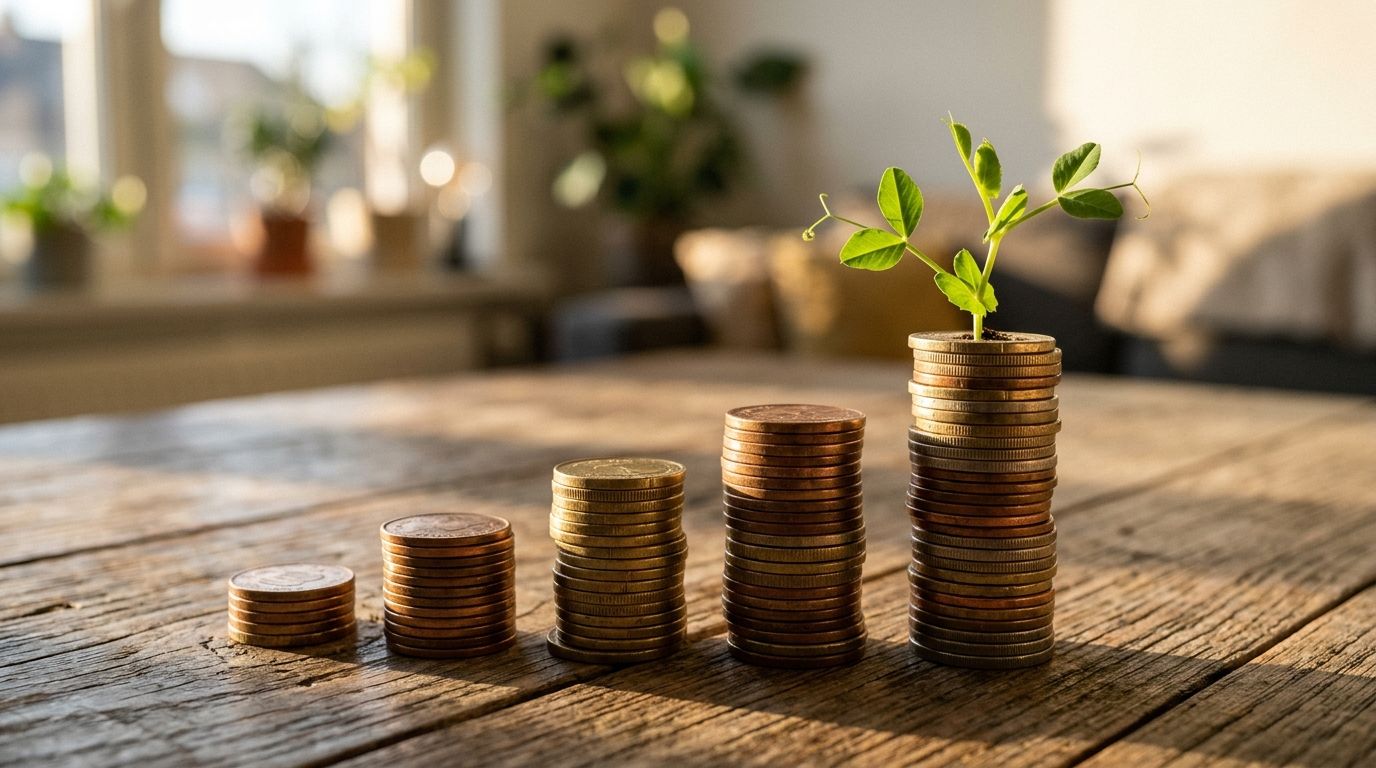
Your first $100,000 is the hardest money to build. At the start, wealth depends almost entirely on how much can be set aside each month. As savings grow, the money begins to work on its own.
In Brief
- Saving $300 a month with no returns takes about 28 years to reach $100,000.
- A 7% return on $100,000 is $7,000 a year, more than contributing $500 a month.
- High-interest debt, no emergency fund and high fund fees stretch the journey the most.
Why is the start so slow?
In the early years, the only driver is the gap between income and spending. In 2024, housing and transport made up more than half of average US household spending.
$300 a month is $3,600 a year. With no returns, reaching $100,000 takes roughly 28 years. On a small balance, even a good return adds only a modest amount.
When compounding kicks in
Compounding means gains earn gains of their own. $10,000 at 7% earns $700 in year one and $749 in year two. The same rate on $100,000 means $7,000 in year one and $7,490 in year two.
For someone investing $500 a month, or $6,000 a year, the return on $100,000 can exceed the money they add. That is why the second $100,000 tends to arrive faster. A larger balance also carries larger losses: a 10% drop equals $10,000.

First, measure net worth properly
Net worth is everything owned minus everything owed. $20,000 in cash, $30,000 in investments and a $200,000 home add up to $250,000 in assets. Subtract a $170,000 mortgage and $5,000 of card debt and net worth falls to $75,000.
In this example only the $30,000 invested generates returns. Tracking net worth and invested assets separately, and updating them every few months, makes progress visible.
Steps that shorten or stretch the road
High-interest debt erodes savings fastest. Keep minimum payments on every debt and send extra money to the one with the highest rate. A small emergency fund first, then a separate account covering 3-6 months of essentials, prevents forced selling of investments.
Big-ticket savings beat small ones: $150 saved on transport and $100 elsewhere adds up to $3,000 a year. Raising income and automating savings on payday also set the pace.
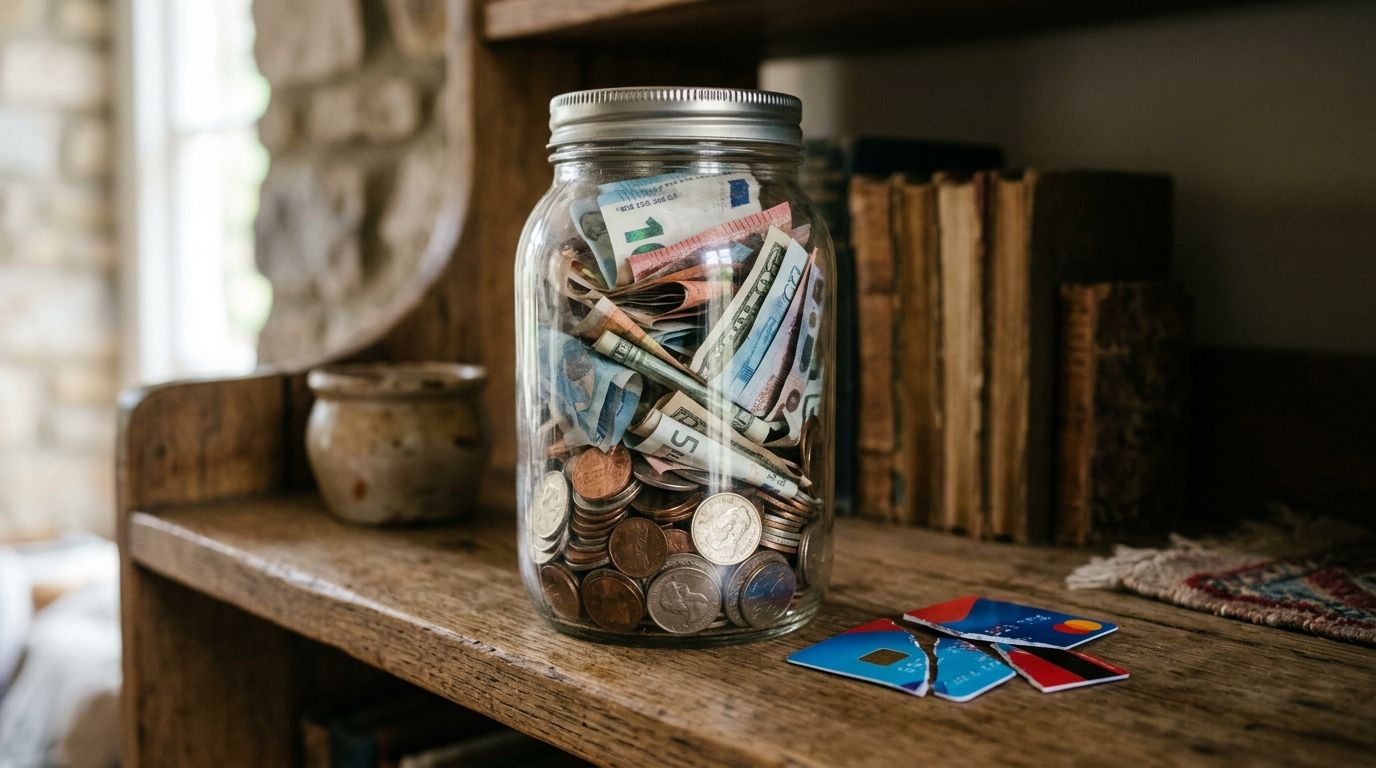
Fees look small but they compound too. Over 20 years, a $100,000 portfolio with a 1% annual fee ends up nearly $29,000 smaller than with a 0.25% fee. Investing at regular intervals (dollar cost averaging) removes the pressure to guess the right day. For money needed within a few years, lower-risk options come to the fore.

Key Assets
| Asset | Outlook | Why? | Key Level |
|---|---|---|---|
| Low-cost index fund | Positive | Spread across hundreds of companies, low fees | Fee around 0.25% |
| Savings account | Neutral | Suits emergency fund, inflation risk | 3-6 months of expenses |
| Credit card debt | Negative | High interest erodes savings | Carried balance |
| High-fee fund | Under pressure | Fees eat long-term returns | 1% annual fee |
What to Watch
- Spending that rises with every pay rise keeps the saving rate flat.
- Panic selling in a downturn can mean missing the recovery that follows.
- Offers promising high returns with little risk are a common sign of investment fraud.
This note was compiled from open-source data and content available online; it does not constitute investment advice.
This article is for general information only and is not investment advice.